
New Puppy Shopping List: What to Buy Before Bringing Your Puppy Home and What Can Wait
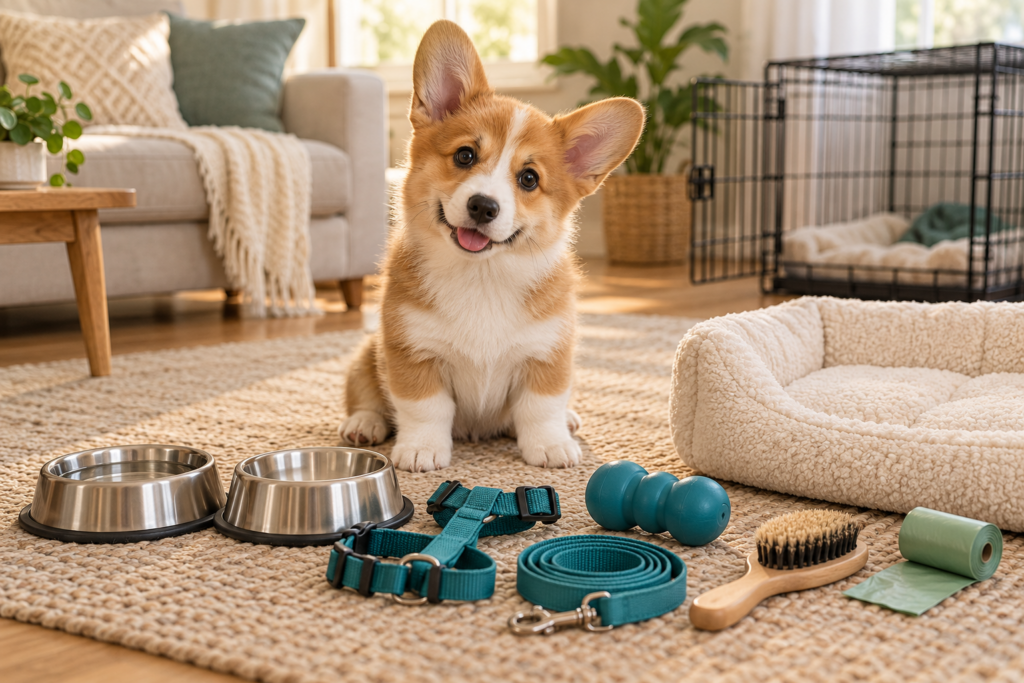
Bringing home a puppy doesn’t mean buying everything in the pet store. You need a few practical supplies for feeding, sleeping, toilet breaks, identification, and supervised play.
This new puppy shopping list helps you choose what to have ready before arrival, what depends on your puppy, and what you can buy later.
Start with the essentials for your puppy’s first week. Check what you already have, choose sizes that fit your puppy, and avoid buying extras before you know whether you need them.
As an Amazon Associate I earn from qualifying purchases. Some links on this page are affiliate links, which means Puppy Starter Plan may earn a commission if you purchase through them, at no additional cost to you.
Your First-Week Puppy Essentials at a Glance
| Essential | What to have ready | What to check before buying |
|---|---|---|
| Puppy food | The food your puppy currently eats | Exact recipe and feeding instructions |
| Food and water bowls | Two easy-to-clean bowls | Bowl size and stability |
| Collar and identification tag | An adjustable collar and readable tag | Neck measurement and secure attachment |
| Everyday leash | A manageable leash for supervised outings | Clip strength and suitable size |
| Sleeping and supervision area | A crate, pen, or puppy-safe enclosed space | Puppy size, room layout, and safe setup |
| Bedding | A washable blanket or suitable bed | Chewing habits and ease of cleaning |
| Chew toys | A small selection suitable for puppies | Age, size, and chewing guidance |
| Training rewards | Small suitable treats or part of the daily food allowance | Ingredients and portion size |
| Waste bags | Bags ready by the door | Size, strength, and ease of use |
| Accident cleaner | A cleaner designed for pet accidents | Surface compatibility and label directions |
| Grooming supplies | Tools appropriate for your puppy’s coat | Coat type and tool suitability |
You don’t need a separate purchase for every row. A blanket you already own may be suitable, and some puppies will happily work for pieces of their usual food.
1. Puppy Food: Start With What They Already Eat
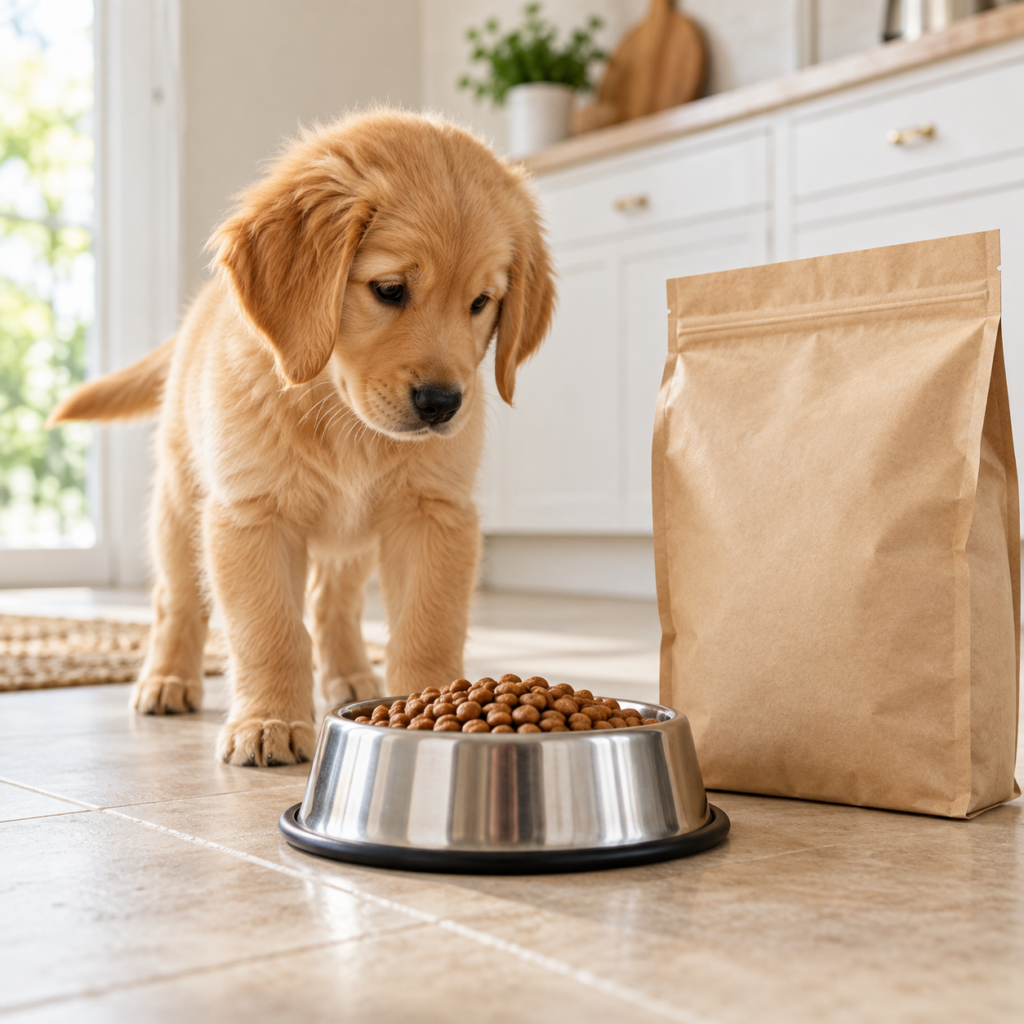
Before your puppy arrives, ask the breeder, rescue, or previous caregiver for the exact name of their current food and their usual feeding schedule.
Having familiar food ready gives you one less change to manage during the first few days. If you later decide to switch foods, make a gradual transition with guidance appropriate to your puppy.
An option to consider: Purina ONE +Plus Healthy Puppy food
This is one of the puppy-food options on our shopping list. Check the linked listing carefully for the recipe and bag size you intend to purchase.
Why consider it: It provides a specific puppy-food option to compare when choosing supplies.
What to check: Suitability for your puppy’s expected adult size, individual needs, and current diet. Don’t switch immediately just because a food appears on a shopping list.
2. Food and Water Bowls
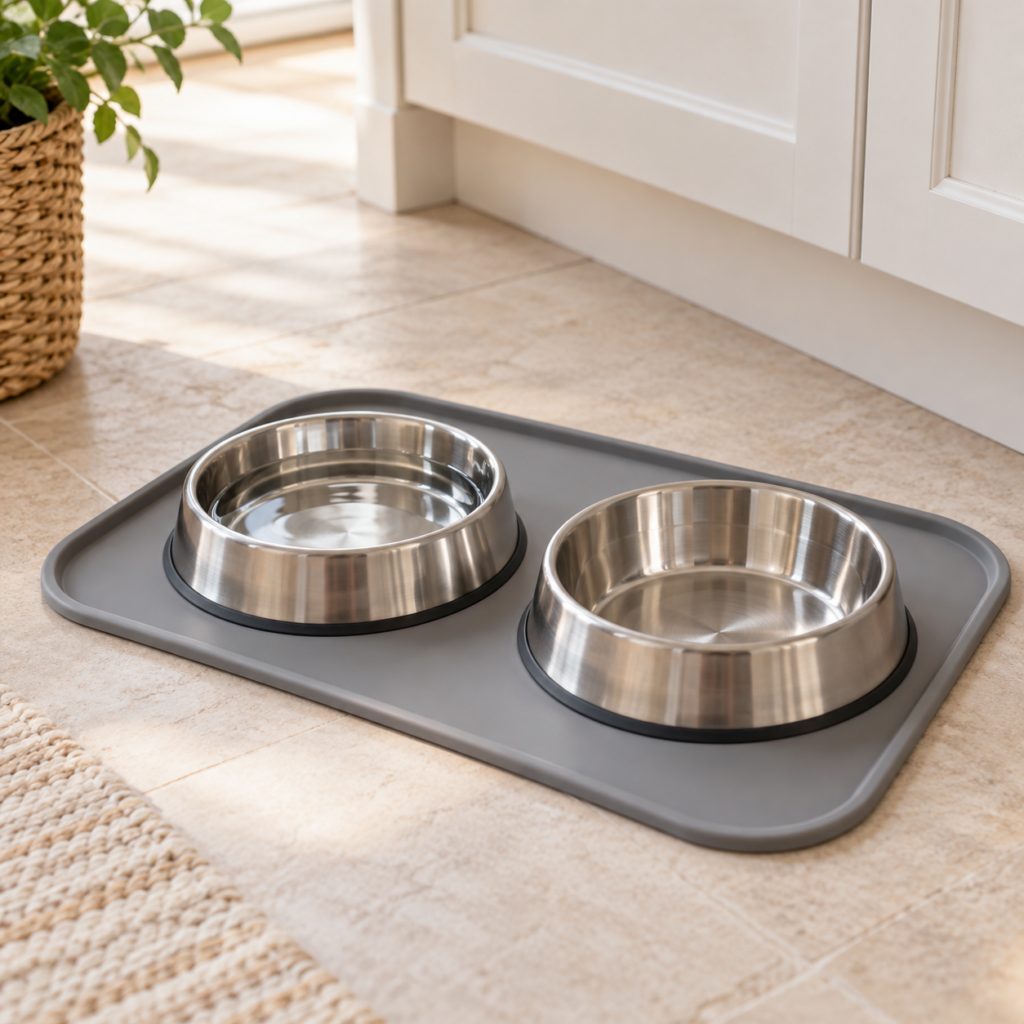
Have separate food and water bowls ready. Choose bowls that are easy to wash and stable enough for your puppy to use comfortably.
A feeding mat can help contain small spills, although you will still need to clean around and underneath it.
An option to consider: Hubulk stainless steel bowl set
Why consider it: A paired bowl setup can give you a simple, organized feeding area.
What to check: Bowl capacity, overall dimensions, and whether the selected variation includes the mat shown in the listing.
3. An Adjustable Collar and Identification Tag
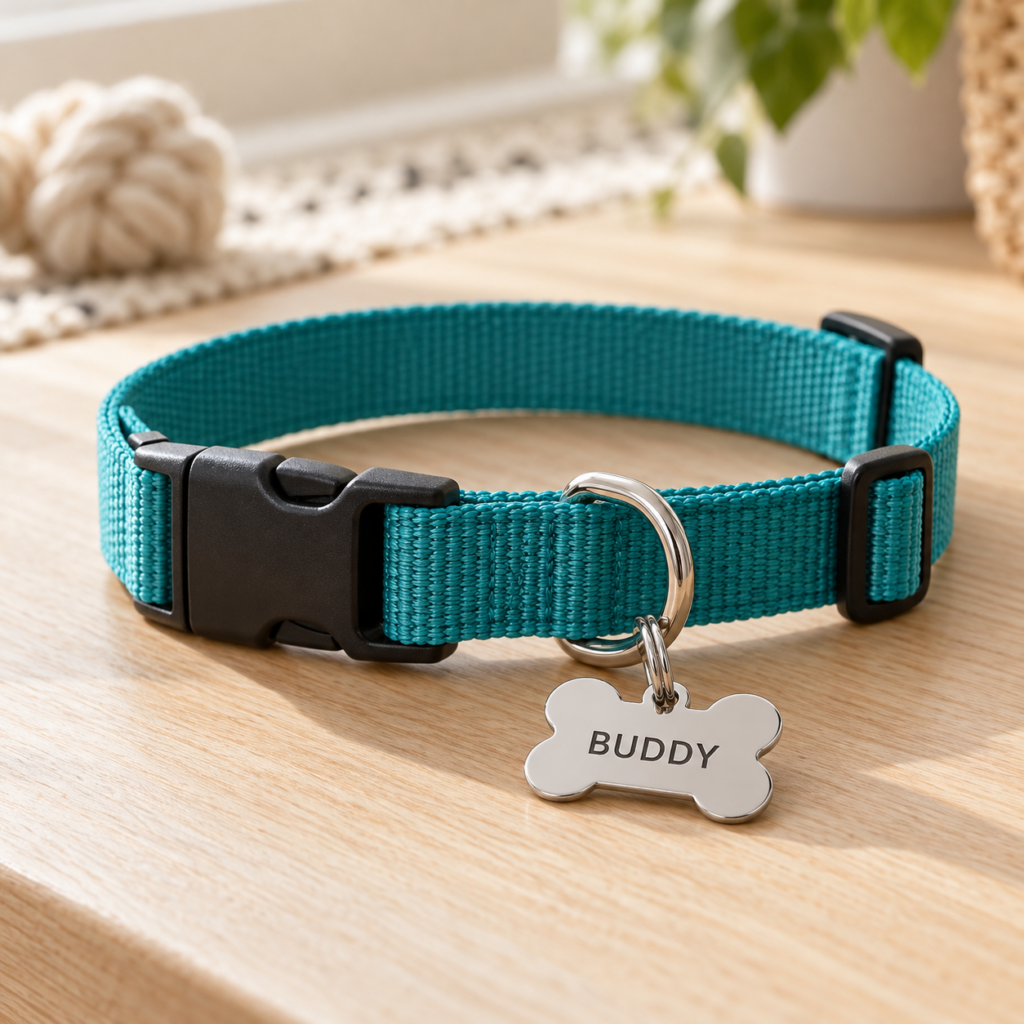
Have identification ready before your puppy comes home. A readable tag with your current contact information can help someone reach you if your puppy gets lost.
Choose a collar using your puppy’s neck measurement rather than breed alone. Check the fit regularly as your puppy grows.
An option to consider: YEHANTI personalized identification tag
This also offers a collar option. Check which variation you are ordering so you know whether your purchase includes a tag, a collar, or both.
Why consider it: A personalized tag lets you add your puppy’s identification and your contact details.
What to check: Tag size, engraving details, attachment hardware, and collar measurements if you select the collar option.
4. An Everyday Leash
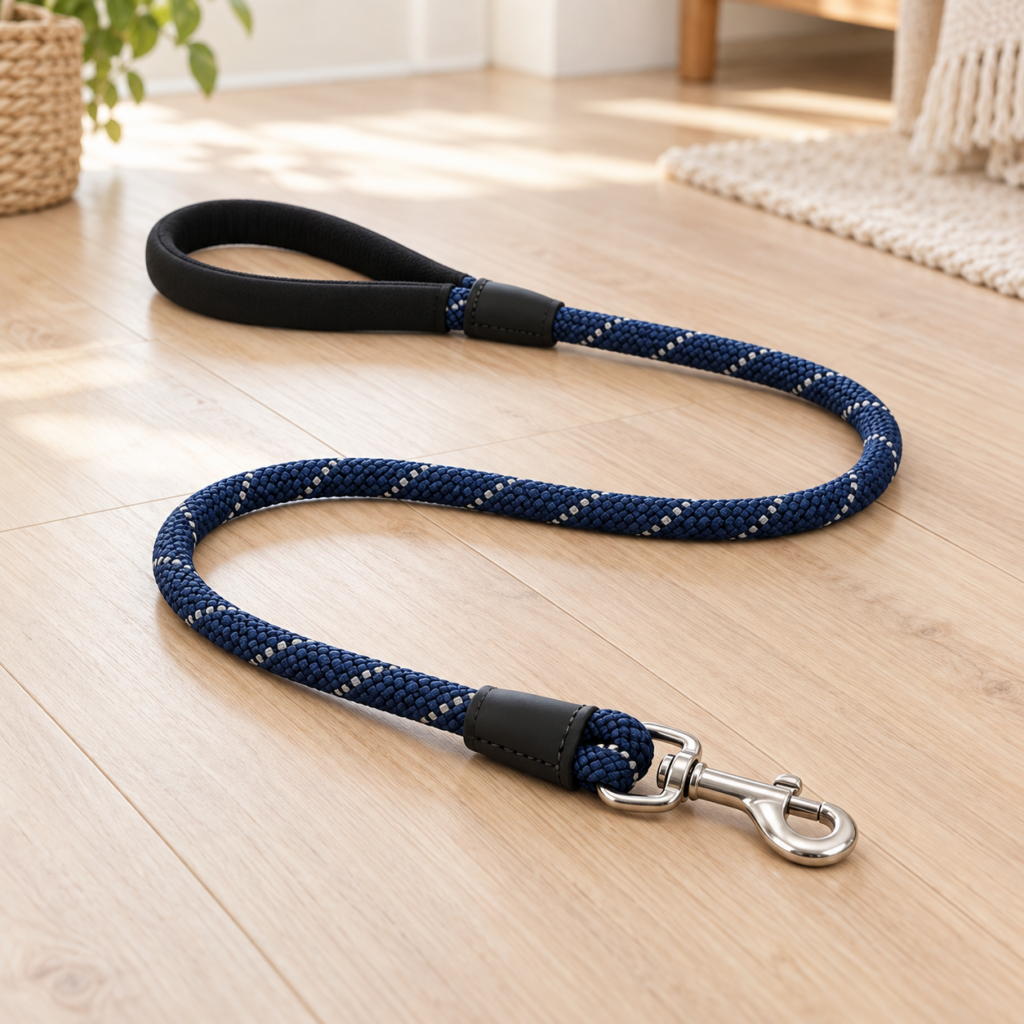
Have an everyday leash ready for supervised toilet breaks and appropriate outings. Choose a length and weight that are manageable for you and suitable for your puppy.
An option to consider: Candure Dog Leash
Why consider it: An everyday leash keeps your puppy close during toilet trips, walks, and early training.
What to check: The selected length, material, handle, clip, and suitability for your puppy’s size. Check the listing’s measurements and inspect the leash regularly for damage.
Introduce the leash during short, calm sessions. Reward your puppy for staying near you and avoid pulling or jerking them into position.
5. A Safe Sleeping and Supervision Area
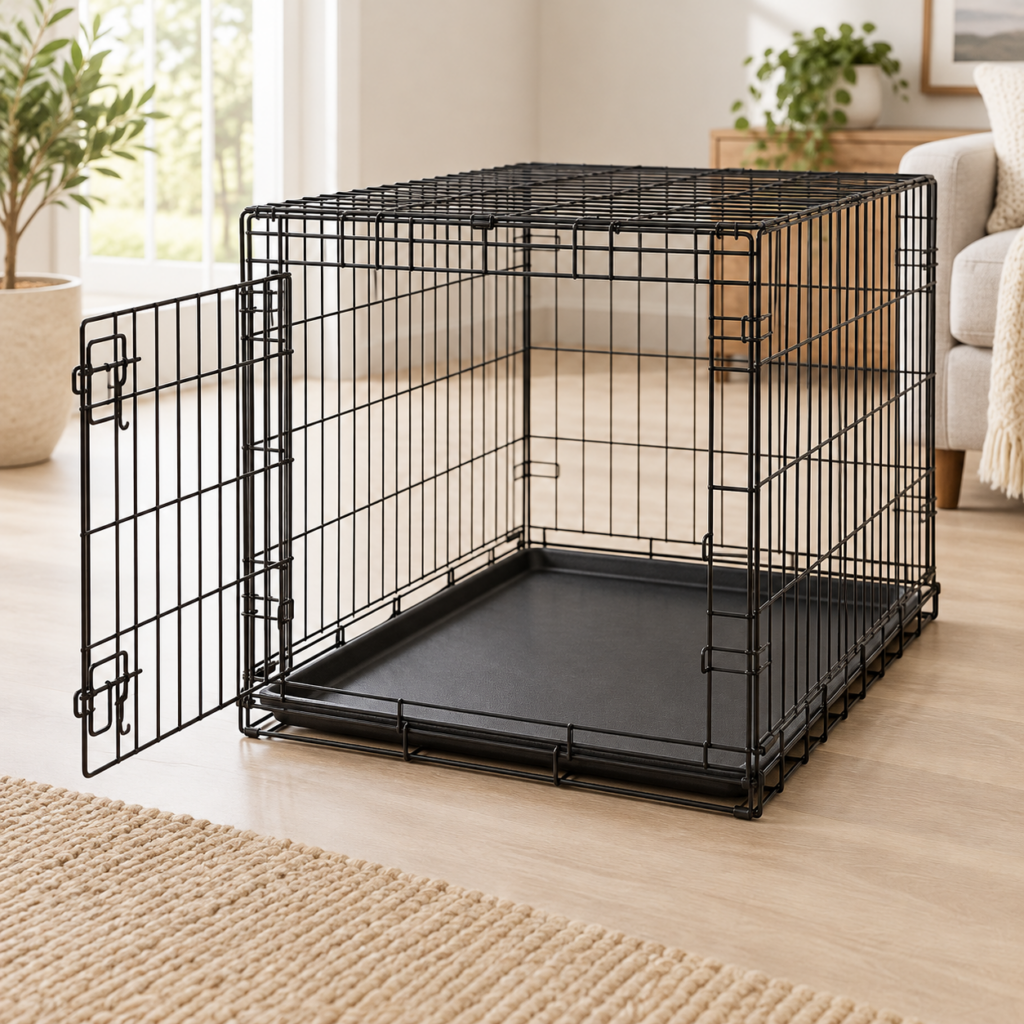
Your puppy needs a comfortable place to rest and a manageable area where you can supervise them.
Depending on your home, that might be a crate, puppy pen, gated room, or a combination. You don’t necessarily need all of them.
An option to consider: Amazon Basics foldable wire dog crate
Why consider it: A wire crate is an option for creating a defined resting space and introducing crate training.
What to check: Exact dimensions, door arrangement, included accessories, and suitability for your puppy. Your puppy should be able to stand, turn around, and lay down comfortably.
Introduce the crate gradually. Start with positive experiences, keep the door secured open during early exploration, and avoid using it as punishment.
For help getting started, read our guide to crate training a puppy.
6. Simple, Washable Bedding
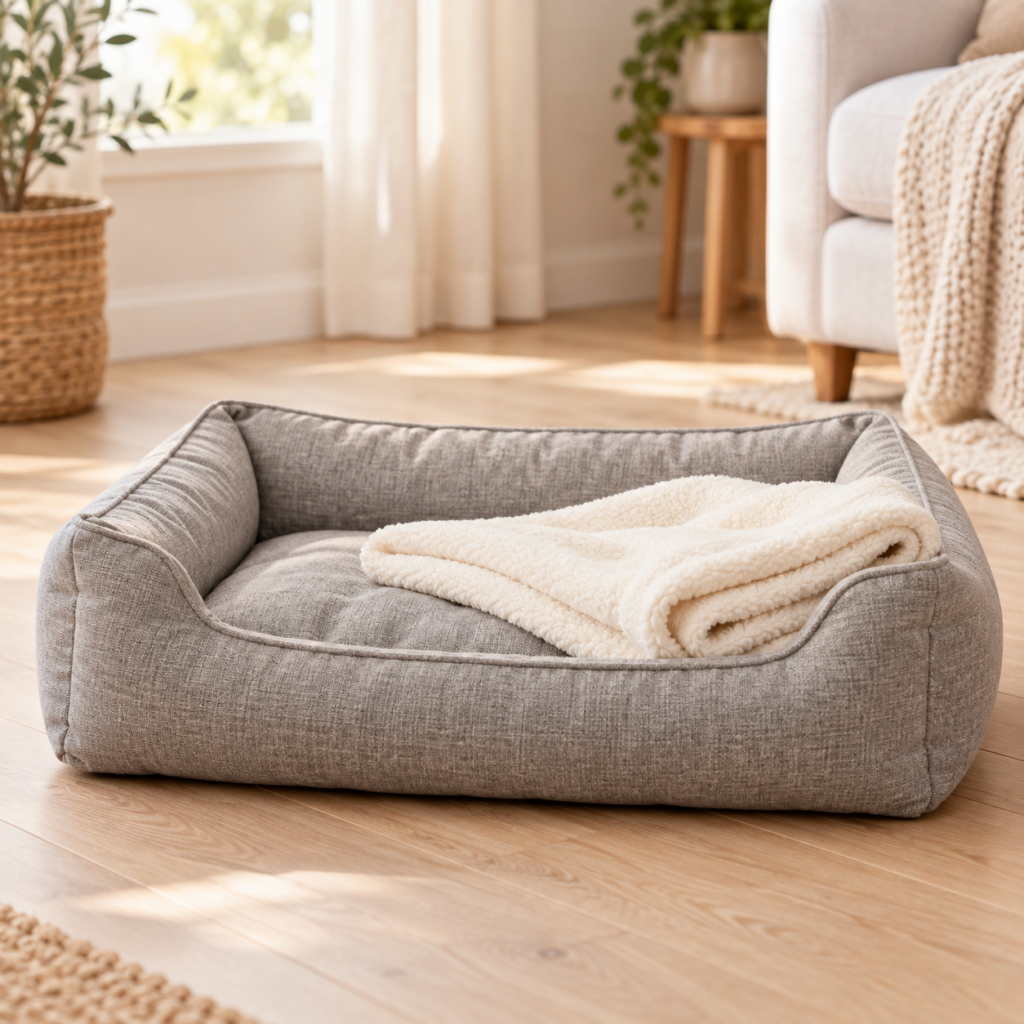
Give your puppy a comfortable resting spot with bedding that is easy to clean and appropriate for their chewing habits. A simple suitable blanket or washable bed is enough to begin with.
An expensive bed can wait until you know whether your puppy is likely to chew it, have accidents on it, or quickly outgrow it. Check bedding regularly and remove anything your puppy is tearing apart or swallowing.
What to look for: A Simple Washable Puppy Bed or Blanket
An option to consider: Mora Pets washable dog crate pad
Why consider it: Easy-to-clean bedding makes it simpler to manage accidents and keep your puppy’s resting area comfortable.
What to check: Dimensions, washing instructions, drying requirements, and suitability for your puppy’s sleeping area. Check whether the whole bed is washable or only its cover.
Buying priority: Start with one practical option. A suitable blanket you already own may be enough; add a more permanent bed once your puppy’s size and habits are clearer.
7. A Small Selection of Puppy Chew Toys
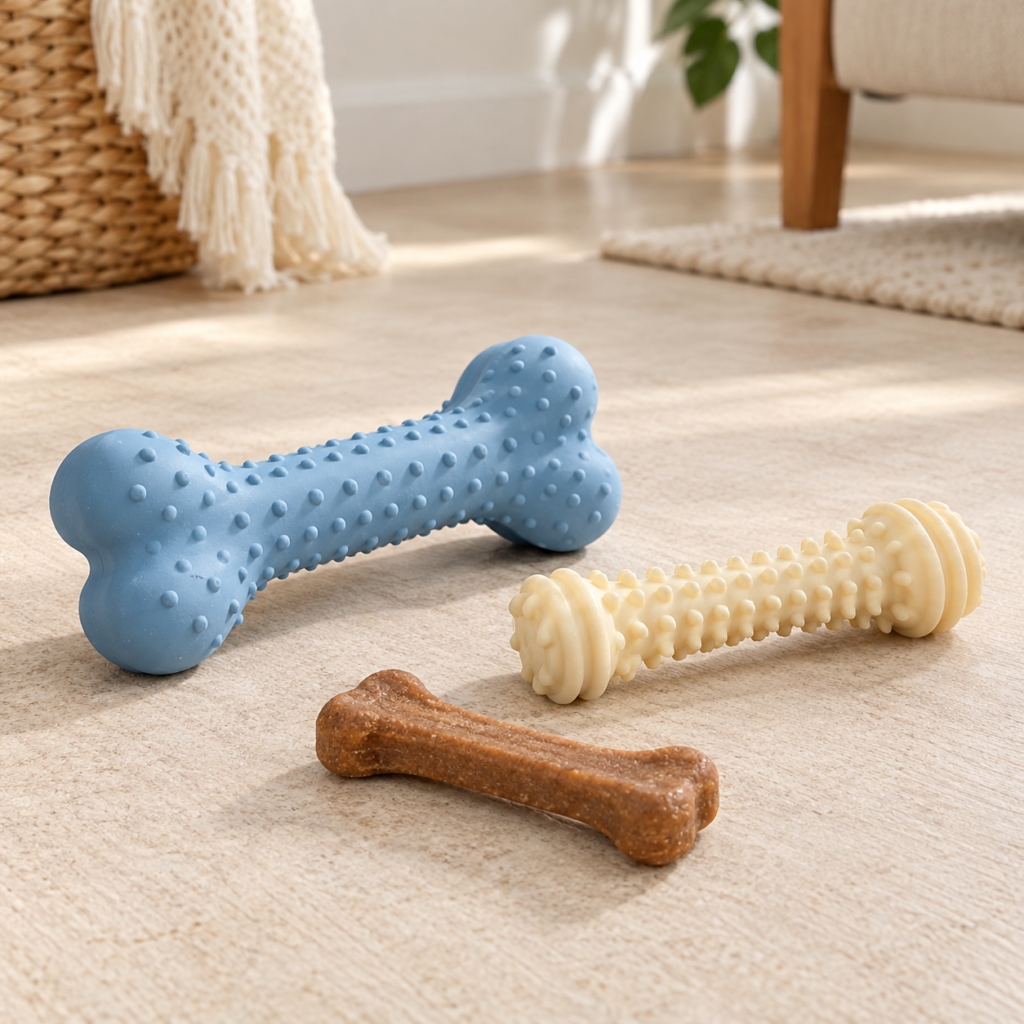
You don’t need a large toy collection on day one. Begin with a few suitable options and learn which textures and shapes your puppy prefers.
Choose using the manufacturer’s age, size, and chewing guidance. Supervise use and check toys regularly for damage.
An option to consider: Nylabone Puppy Chew Toy & Treat Starter Set
Why consider it: A starter set offers several items to compare with your puppy’s needs.
What to check: The exact contents of the selected set and the instructions for each item. Edible treats and non-edible chew toys have different uses and precautions.
For help redirecting chewing, read Puppy Biting & Chewing.
8. Small Training Rewards
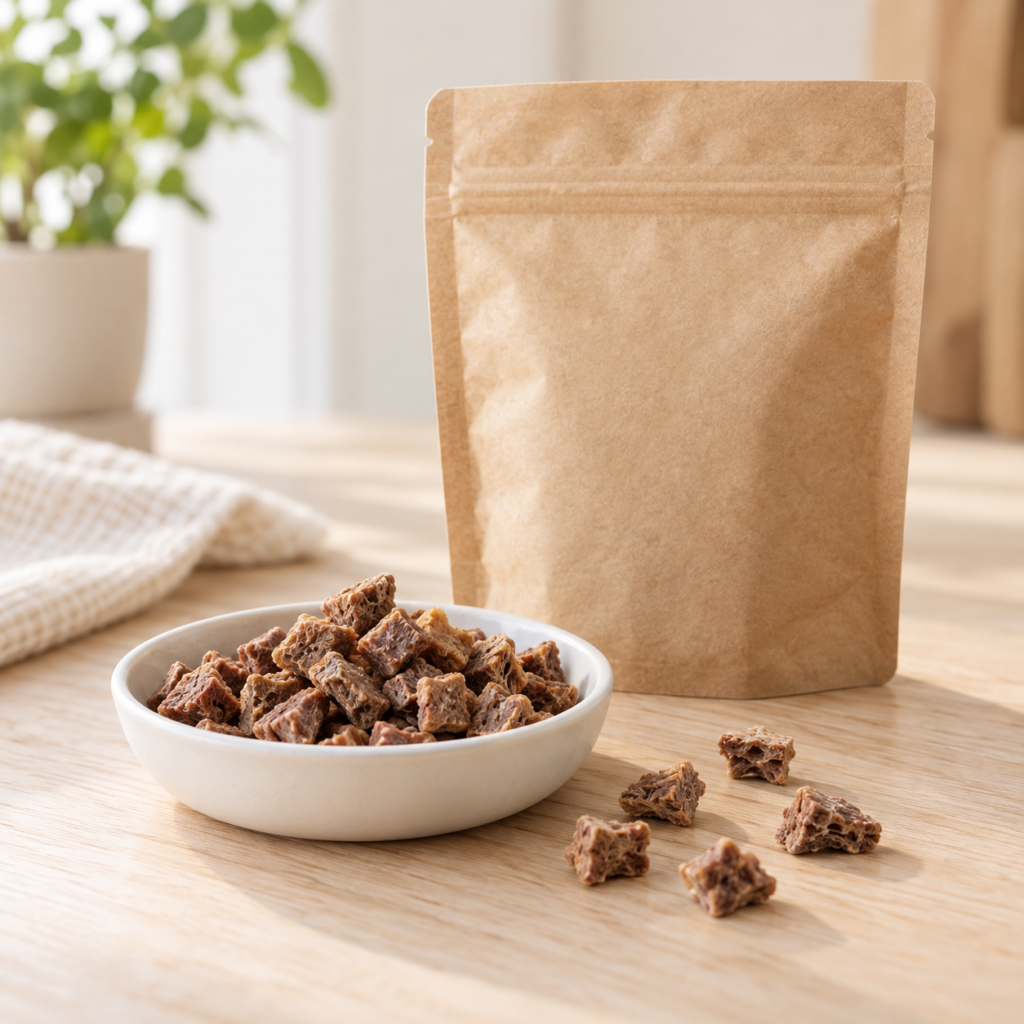
Have suitable rewards ready for early training, calm behaviour, and toilet successes. Small rewards let you reinforce your puppy frequently without giving a large treat each time.
You may be able to use part of your puppy’s usual food allowance. If you buy treats, choose portions appropriate for your puppy and account for them in daily feeding.
An option to consider: Crumps’ Naturals Freeze-Dried Training Treats
Why consider it: A training-treat option to compare for rewarding your puppy during short practice sessions.
What to check: The selected recipe, ingredients, package size, feeding guidance, and suitability for your puppy’s age and dietary needs. Check the size of each piece and divide into smaller portions if appropriate.
Buying priority: One suitable reward is enough to begin with. You don’t need several bags before you know what your puppy enjoys.
9. Waste Bags
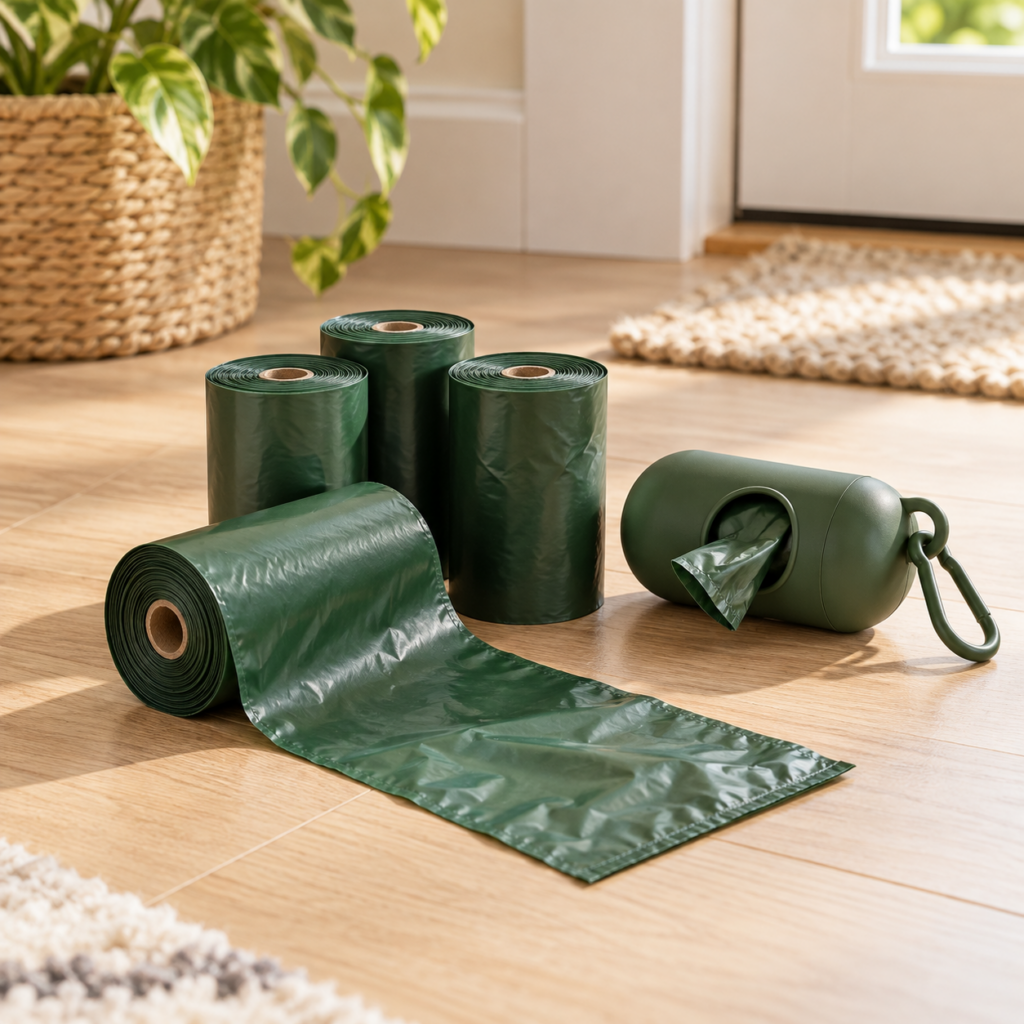
Keep waste bags somewhere easy to reach, such as beside the door or with your leash.
An option to consider: Yingdelai dog waste bags
Why consider it: A multipack gives you a supply for regular cleanups.
What to check: Bag dimensions, quantity, and whether a dispenser is included in your chosen option. Don’t assume environmental claims unless the product provides supporting information.
10. A Cleaner for Puppy Accidents
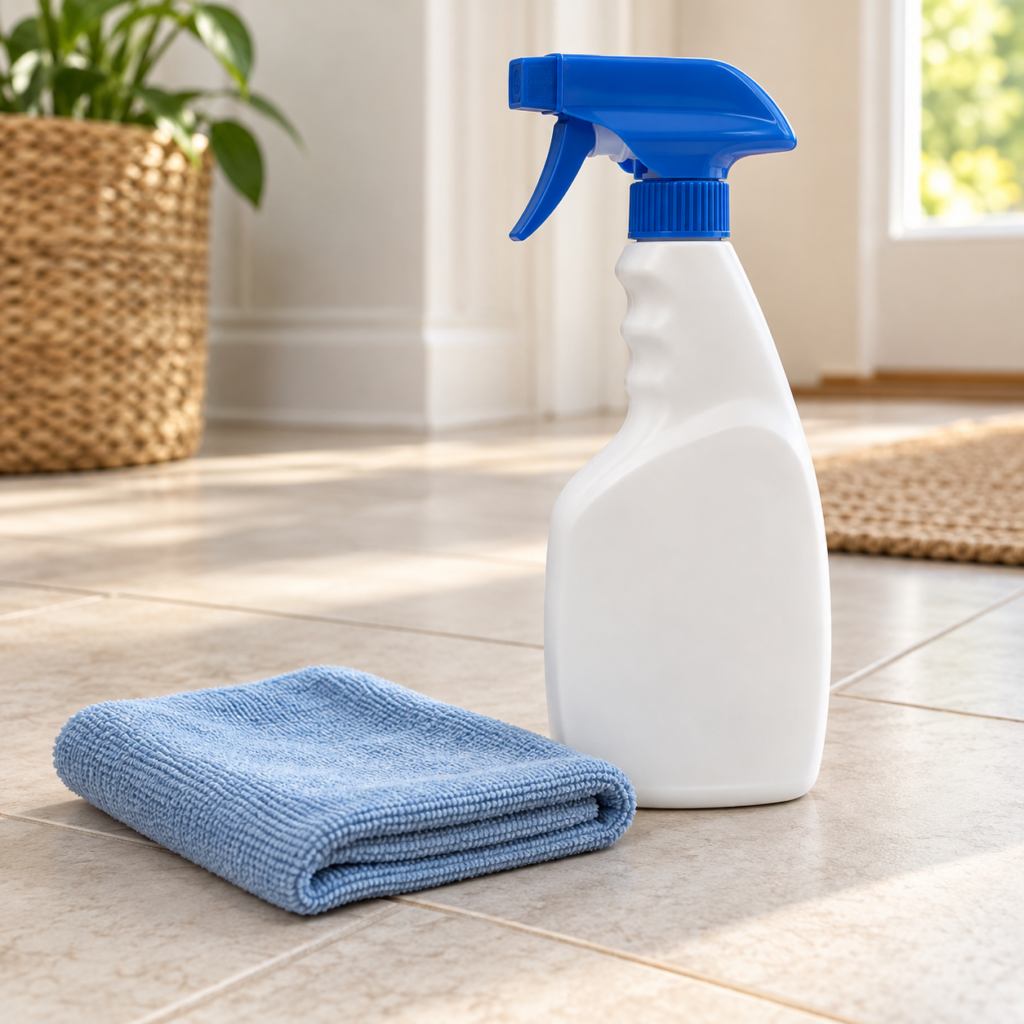
Have an appropriate cleaner ready before the first accident. Choose a product designed for pet messes and suitable for the surfaces in your home.
Follow the label instructions, including any testing, application, drying, and pet-access directions.
An option to consider: Nature’s Miracle Advanced stain and odour remover
Why consider it: This is a pet-accident cleaning option to compare for your cleanup supplies.
What to check: Exact formula, bottle size, suitable surfaces, and directions. Different products from the same brand may have different instructions.
Pair your cleanup supplies with a routine using our puppy potty training guide.
11. Grooming Supplies That Suit Your Puppy’s Coat
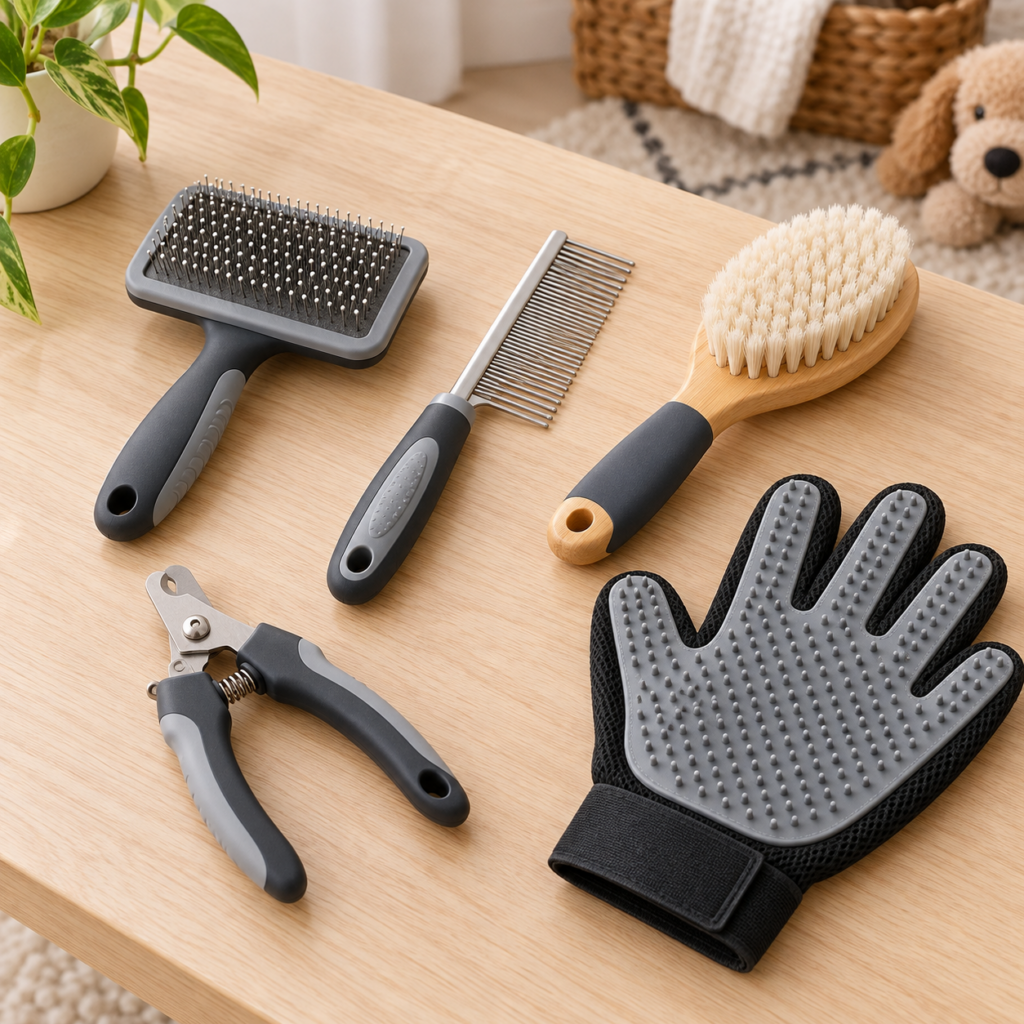
The right grooming tools depend on your puppy’s coat. A short-coated puppy may need a different brush from a puppy with a long, curly, or double coat.
Start with gentle handling and short sessions. Ask a groomer to help you choose tools if you are unsure.
An option to consider: Aside 5pc Dog grooming kit
Why consider it: A kit may offer several basic tools in one purchase.
What to check: Exact contents and whether each tool suits your puppy. Don’t buy a kit simply because it contains more pieces, and don’t use a dematting or shedding tool without knowing how to use it appropriately.
What Can Wait?
Buy additional supplies when they solve a need you have noticed.
| Item | When it may become useful |
|---|---|
| Long recall lead | When you begin supervised distance training |
| Extra toys | Once you know your puppy’s preferences |
| Food puzzles and snuffle mats | When you want suitable supervised enrichment |
| Slow feeder | If your puppy needs help eating more slowly |
| Premium bed | Once size and chewing habits are clearer |
| Treat pouch | When carrying rewards becomes inconvenient |
| Additional grooming tools | After you understand your puppy’s coat needs |
| Decorative collars and outfits | After practical fit and identification needs are covered |
A puppy pen, baby gate, or suitable harness may belong on your first-week list if your home or puppy needs one. These are individual decisions rather than automatic extras.
More Puppy Supplies to Consider Later
Once your puppy has settled in, you’ll have a better idea of which additional supplies would be useful. You don’t need to buy everything before bringing them home.
The products below can help with enrichment, training, grooming, or managing your home. Choose items that solve a need you’ve noticed and suit your puppy’s age, size, coat, and chewing habits.
Depending on your setup, you might consider:
- Food puzzles, snuffle mats, and food-stuffable toys for supervised enrichment
- A slow feeder if your puppy needs help eating more slowly
- A treat pouch for keeping rewards handy during training
- Additional toys once you know which types your puppy enjoys
- A puppy pen or baby gate if you need another supervised area or a way to limit access
- A suitable harness for outings, depending on your puppy’s needs
- Additional grooming tools once you understand your puppy’s coat requirements
- An upgraded bed once their size and chewing habits are clearer
Some of these may be useful from the beginning in your home. Others can wait or may never be necessary. Start with the basics and add supplies as you need them.
Browse the additional puppy supplies below:
Harness
A properly fitted harness can be useful for supervised walks and training.
Check the measurements and adjustment range before buying. Your puppy may outgrow an early harness quickly, so check the fit regularly.
Long Recall Training Lead
A long lead can be useful when you begin practising recall and supervised exploration in suitable open spaces. It serves a different purpose from your everyday walking leash.
Check the length, material, clip, and suitability for your puppy. Longer leads require careful handling and can tangle around people, dogs, and obstacles.
Puppy Pads
Whether you need puppy pads depends on your potty-training approach and living situation. They may be useful when access to an appropriate outdoor toilet area is limited, such as living in an apartment.
If your goal is outdoor potty training, focus on a consistent outdoor routine rather than automatically adding pads.
For help building that routine, see How to Potty Train a Puppy.
Interactive Toys
Food-dispensing toys and simple puzzles can add variety to your puppy’s supervised activities.
Start with an easy option and help your puppy learn how it works. Check size and age guidance, and account for food used in toys when planning daily portions.
Tug Toy
A tug toy can give you another way to play together.
Choose a suitable size, keep play gentle, and let your puppy release the toy without pulling it from their mouth. Put it away if it becomes damaged or your puppy starts swallowing pieces.
Soft Toy
Some puppies enjoy carrying or cuddling soft toys, while others quickly pull them apart.
Start with one rather than buying a collection. Supervise use and remove the toy if your puppy exposes stuffing, damages the squeaker, or swallows pieces.
Puppy Shampoo
Have a suitable dog shampoo available when your puppy needs a bath. Check the label for age suitability and follow the directions.
You don’t need several grooming products to begin with. Choose according to your puppy’s coat and any guidance from your veterinarian or groomer.
Nail Clippers or Grinder
Choose nail-care tools that suit your puppy’s size and that you feel comfortable using.
Begin with short, positive introductions to paw handling and the tool. If you’re unsure how to trim safely, ask a veterinarian or groomer to demonstrate before trying it yourself.
If your grooming kit already includes suitable nail clippers, you may not need a separate purchase.
Dog Toothbrush and Toothpaste
Gentle introductions to mouth handling and a suitable toothbrush can help your puppy become comfortable with dental care.
Choose toothpaste specifically intended for dogs. Never use human toothpaste, and ask your veterinarian about an appropriate routine for your puppy.
Treat Pouch
A treat pouch makes it easier to keep rewards handy during walks and training sessions.
It isn’t essential on day one. Add one if carrying treats in a pocket or small container becomes inconvenient.
Baby Gates
Baby gates can help limit access to stairs, rooms, or areas you haven’t puppy-proofed.
Depending on your home, a gate may be useful immediately rather than later. Check the opening width, installation requirements, and whether your puppy could squeeze through, climb over, or chew the gate.
Extra Household Supplies
Alongside the accident cleaner and bedding covered in the essentials section, a few ordinary household items can make cleanup easier:
- Paper towels
- Old washable towels
- A storage container for puppy supplies
- Laundry detergent appropriate for your bedding’s care instructions
Use what you already own where practical. Store cleaning products and other household supplies out of your puppy’s reach.
Buy Additional Supplies as You Need Them
Before adding another item, ask whether it solves a problem you’ve actually noticed.
You can usually wait before buying:
- Large toy collections
- Multiple harnesses
- Premium beds
- Fancy feeding equipment
- Large quantities of one type of treat
- Specialized training equipment
Your puppy’s preferences, size, and habits will become clearer over time. Start with a small selection and replace or expand it when there’s a useful reason.
Don’t Forget the Non-Shopping Preparations
Some of the most important puppy preparations don’t come from a store.
Before bringing your puppy home, plan for:
- Choosing a veterinarian
- Deciding where your puppy will sleep
- Arranging regular potty breaks
- Confirming their current food and feeding schedule
- Setting household rules
- Choosing consistent basic training cues
- Planning suitable socialization experiences
Puppy-proof your home, paying particular attention to:
- Electrical cords
- Medications and cleaning products
- Small objects and children’s toys
- Toxic plants
- Foods dogs shouldn’t eat
- Accessible garbage
- Loose strings or fabric
- Anything your puppy could chew or swallow
For help putting these preparations together, creating routines, and settling in, read Your Puppy’s First Weeks at Home.
How to Avoid Buying Supplies Twice
Before placing your order:
- Measure your puppy for wearable items
- Check crate and bowl dimensions
- Confirm the selected colour, size, and quantity
- Read age and chewing guidance for toys
- Check what is actually included in a set
- Compare supplies with what you already own
- Ask which food your puppy currently eats
A useful purchase fits your puppy and solves a practical problem. More expensive or more elaborate doesn’t automatically mean more suitable.
Shop the Essentials for Your Puppy’s First Week
Start with food, bowls, identification, an everyday leash, a safe resting area, suitable chews, waste bags, and accident-cleaning supplies.
Use the Amazon links above to check the options that fit your puppy. Add the remaining items as you learn what you need.
Not ready to shop yet? Get the free Puppy Starter Checklist and check off what you already have.
For help with routines, supervision, and settling in, read Your Puppy’s First Weeks at Home.