
Everything You Need For Your New Puppy’s First Weeks At Home
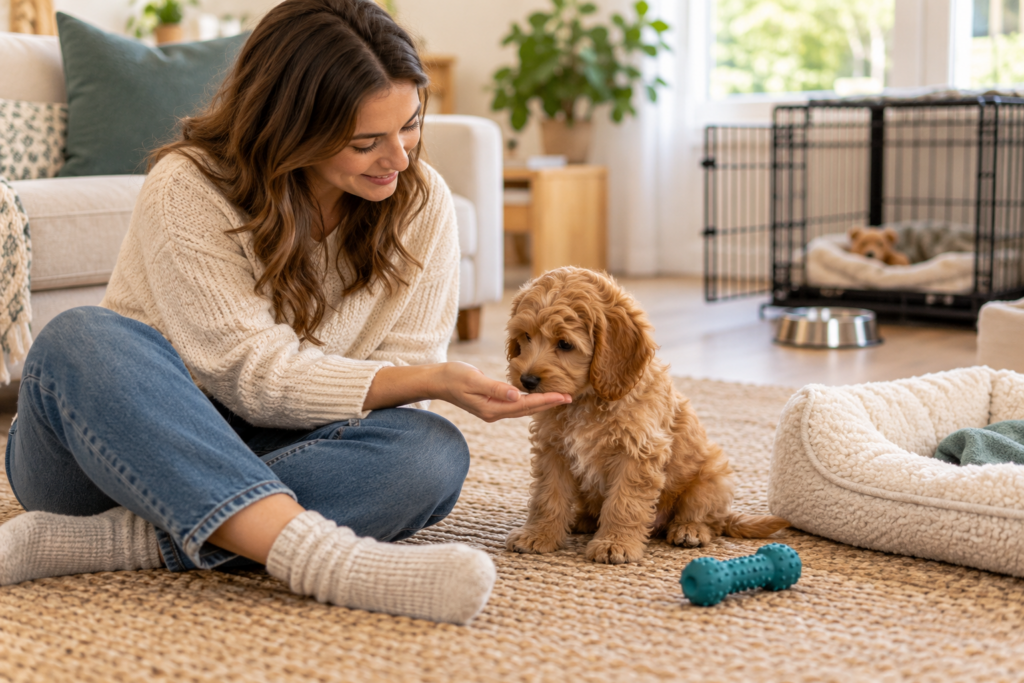
Bringing home a new puppy is exciting, but those first few weeks can also feel a little chaotic.
Your puppy is learning where to sleep, where to go to the bathroom, when meals happen, what they’re allowed to chew, who everyone is and what all the strange sounds and smells in their new home mean.
At the same time, you’re trying to figure out feeding, potty training, sleeping, vet appointments, puppy-proofing, training and everything else that comes with a new puppy.
You don’t need to get everything perfect.
A good first few weeks are mostly about helping your puppy feel safe, establishing predictable routines and gradually teaching them how life in their new home works.
Before Your Puppy Comes Home
A little preparation can make the first few days considerably easier.
Start by deciding where your puppy will eat, sleep, play and go to the bathroom.
You don’t necessarily need to give a new puppy access to your entire home. A smaller puppy-safe area is usually easier to supervise while your puppy learns the rules.
Have the basic supplies ready:
- Puppy food
- Food and water bowls
- Collar and identification tag
- Leash
- Crate, pen or safe sleeping area
- Washable bed or blanket
- Puppy-safe chew toys
- Training treats
- Waste bags
- Enzymatic accident cleaner
- Grooming supplies appropriate for your puppy
You can add other supplies as you discover what your puppy actually needs.
Puppy-Proof Your Home
Puppies investigate things with their noses and mouths, so look at your home from puppy level.
Secure or remove things such as:
- Electrical cords
- Medications
- Household cleaners
- Garbage
- Small objects that could be swallowed
- Foods your puppy shouldn’t eat
- Toxic plants
- Shoes and clothing
- Children’s toys
Baby gates or an exercise pen can help limit access to areas that aren’t ready for your puppy.
Keep the First Few Days Simple
Your puppy has just experienced a major life change.
They may have left their mother, littermates, breeder, foster home or shelter and suddenly arrived somewhere completely unfamiliar.
Some puppies immediately want to investigate everything. Others may be cautious, sleepy, restless or vocal.
Give your puppy time to adjust.
Instead of filling the first few days with visitors and activities, concentrate on helping your puppy learn their immediate environment and routine.
Establish a Predictable Routine
Puppies generally benefit from knowing what happens next.
Try to establish reasonably consistent times for:
- Waking
- Meals
- Bathroom breaks
- Play
- Training
- Quiet time
- Bedtime
Your schedule doesn’t have to run by the minute.
The goal is simply to create some predictability.
Start Potty Training Immediately
Potty training begins as soon as your puppy arrives home.
Take your puppy to the appropriate bathroom area frequently, particularly after waking, eating, drinking and playing.
When your puppy goes in the correct place, reward them immediately.
Accidents will happen. Clean them thoroughly and consider whether your puppy needs more supervision or more frequent opportunities to go outside.
For a more detailed plan, see our puppy potty-training guide.
Introduce the Crate Gradually
If you’re using a crate, try to make it a comfortable and positive place.
You can place treats inside, feed your puppy near or inside the crate and encourage short periods of relaxation.
Avoid using the crate primarily as punishment.
Your puppy should gradually learn that the crate is somewhere safe to rest.
If you plan to use a crate, start with short, comfortable introductions and give your puppy time to explore. Our guide to how to crate train a puppy walks you through the first steps, including introducing the crate and gradually building comfort with the door closed.
Expect Puppy Biting
Puppy biting and mouthing are extremely common.
Puppies use their mouths to investigate and play, and teething can increase the desire to chew.
Keep appropriate chew toys within easy reach so you can redirect your puppy.
Also watch for patterns. Some puppies become particularly mouthy when they’re excited, overstimulated or overtired.
Our puppy biting and chewing guide goes into this in more detail.
Start Training Early
Training doesn’t have to wait until your puppy is older.
Short, positive sessions can begin during the first few days.
Good early skills include:
- Name recognition
- Come
- Sit
- Leave it
- Drop it
- Waiting briefly
- Settling calmly
A few minutes at a time is plenty for a young puppy.
Want More Structured Training Help?
If you’d like a step-by-step training system to follow, we’ve selected a training program that may be helpful for puppy owners who want additional guidance.
See our recommended training program
Disclosure: We may earn a commission if you purchase through this link, at no additional cost to you.
Don’t Forget Sleep
Puppies need a lot of rest.
An overtired puppy doesn’t necessarily look tired. Sometimes they become more energetic, mouthy or difficult to settle.
Build quiet periods and naps into the day rather than trying to entertain your puppy constantly.
Introduce New Experiences Gradually
Socialization is about helping your puppy develop positive associations with the world around them.
Depending on your puppy’s age, health and vaccination status, appropriate experiences might include different people, household noises, surfaces, car rides, handling and new environments.
Avoid overwhelming your puppy just to expose them to as many things as possible.
Ask your veterinarian what activities are appropriate based on your puppy’s vaccination status and local disease risks.
Your puppy’s first weeks are also a chance to introduce everyday sights, sounds, and gentle handling at a comfortable pace. Use our puppy socialization checklist to plan small experiences without trying to fit everything into the first few days.
Arrange Veterinary Care
Ideally, choose a veterinarian before your puppy comes home.
Ask when your puppy should have their first appointment and discuss vaccinations, parasite prevention, nutrition, growth, microchipping and other health considerations.
If you have any concerns about your puppy’s health, behaviour, eating, drinking or development, contact your veterinarian.
Include a veterinary appointment in your first-weeks planning. Our guide to your puppy’s first vet visit explains what to bring, what to discuss, and how to prepare for the appointment.
Don’t Expect Perfection
Your puppy won’t understand all your household rules immediately.
There will probably be accidents.
Things may get chewed.
Training won’t always go as planned.
That’s part of raising a puppy.
Consistency, supervision, appropriate rest and rewarding the behaviours you want can make the learning process easier for both of you.
Keep Your Puppy Starter Checklist Handy
There is a lot to remember during those first few weeks.
Our free Everything You Need for Your Puppy’s First Weeks at Home Checklist gives you a simple way to keep track of the essentials.