
How to Crate Train a Puppy: A Gentle Step-by-Step Start
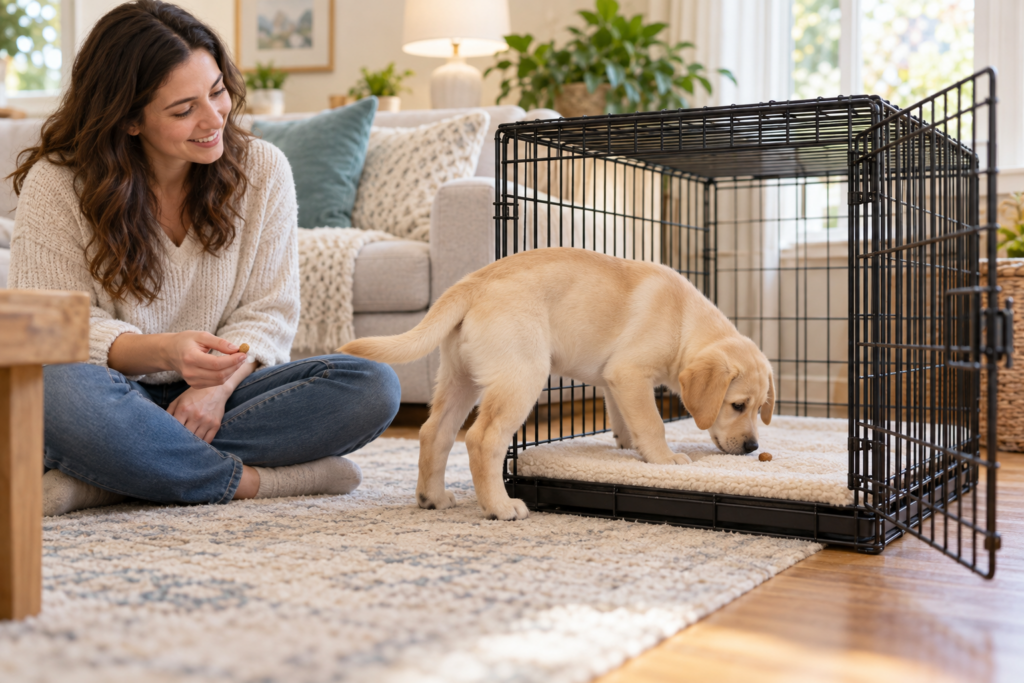
A crate can give your puppy a comfortable place to rest and make it easier to supervise them while they learn your household routine. But a puppy won’t necessarily feel at ease in one simply because you put a bed inside.
The best place to start is with short, positive experiences while you’re nearby. Let your puppy investigate the crate, reward them for going in, and build up to closing the door in small steps. Some puppies progress quickly; others need more time.
Set Up the Crate for Comfort
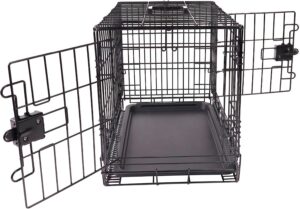
Choose a crate where your puppy can stand up, turn around, and lie down comfortably. If you’ve bought a larger crate for a growing puppy, a divider can make the current sleeping area an appropriate size.
Place it in a part of your home where your puppy can feel included. During the first nights, having it near your sleeping area can also make it easier to hear when your puppy needs a potty break.
Before each session:
- Make sure your puppy has had an opportunity to go potty.
- Remove anything they could chew or swallow unsafely.
- Check that bedding suits your puppy. Some enjoy a soft bed; others chew or soil it.
- Secure the crate door open during the exploration stage so it cannot swing shut unexpectedly.
The crate should be a resting place, not a punishment. A puppy also needs time outside it for meals, potty breaks, play, social contact, and exercise appropriate to their age. Veterinary guidance recommends building a positive association gradually and watching for signs of distress as you increase confinement. VCA Animal Hospitals
If you’re still gathering supplies, see the New Puppy Shopping List.
As an Amazon Associate I earn from qualifying purchases. Some links on this page are affiliate links, which means Puppy Starter Plan may earn a commission if you purchase through them, at no additional cost to you.
Step 1: Let Your Puppy Explore With the Door Open
Start when your puppy is calm and you have a few minutes to stay nearby.
Drop a treat just outside the crate, then another near the entrance. If your puppy willingly reaches inside, place the next treat a little farther back. Let them walk in and out freely.
You can also place a meal or a suitable toy near the entrance. Move it farther inside over several sessions as your puppy grows comfortable.
Don’t push your puppy in or close the door as soon as they enter. At this stage, the goal is simply for them to discover that approaching the crate leads to good things. This gradual exploration follows the positive introduction recommended by the American Kennel Club. akc.org
Step 2: Make Going In a Simple Game
Once your puppy enters comfortably, practice a few easy repetitions:
- Toss a small treat into the crate.
- Let your puppy go in and eat it.
- Encourage them to come back out.
- Repeat a few times, then end the game.
Later, say a cue such as “crate” just before tossing the treat. Give the cue once and reward your puppy for going in. The word becomes useful through practice; your puppy doesn’t need to understand it on the first day.
Keep sessions short. Ending while your puppy is still relaxed makes the next session easier.
Step 3: Close the Door Briefly While You Stay Nearby
When your puppy willingly enters and remains comfortable, give them a treat or a safe, puppy-appropriate activity in the crate. Close the door for a moment, then open it before they become upset.
Repeat, gradually increasing the time only if your puppy remains relaxed. You might close it for a few seconds at first, then work toward longer periods. There is no required timetable: your puppy’s response determines the next step.
Stay close during this stage. Sitting beside the crate while your puppy enjoys a meal or settles for a nap is easier than immediately walking out of the room.
If closing the door changes your puppy’s reaction sharply, return to an easier step. Practice with the door open again, or close it for a shorter moment next time.
Step 4: Build Up Resting Time
When brief door closures are going well, try the crate at a natural rest time – for example, after a potty trip and some gentle play.
Provide a suitable chew or other supervised activity if it helps your puppy settle. You can sit nearby and do something quiet. As they become comfortable, move around the room normally, then practice stepping out of sight for a moment and returning.
Build time in the crate and distance from you separately at first. If you stay beside the crate for a longer rest, keep the next out-of-sight practice very short. Changing both at once can make the exercise harder than your puppy is ready for.
Before leaving a puppy alone with any toy or chew, make sure it is appropriate for that puppy and cannot readily be broken into swallowable pieces.
Step 5: Practice Short Absences
A puppy who can rest in a crate while you sit beside it may still find it difficult when you leave. Treat alone time as another skill to teach.
Begin with ordinary, brief movements: stand up, sit down, walk a few steps away, or step through a doorway and come back. If your puppy stays comfortable, gradually extend the absence.
For the first separations, a camera can help you see whether your puppy settles after you leave or shows signs of distress that you might otherwise miss. VCA recommends monitoring early alone-time sessions and seeking veterinary advice if a dog persistently vocalizes, salivates, attempts to escape, or cannot settle. VCA Animal Hospitals
Do not assume that tolerating a five-minute practice means your puppy is ready to be crated for several hours. Arrange potty breaks and appropriate care around your puppy’s needs.
What Should You Do If Your Puppy Whines?
First, check the likely reasons. A puppy may need a potty break, be uncomfortable, be frightened, or simply be finding the current step too difficult.
If your puppy may need to go, take them out calmly for a potty opportunity. Keep the trip quiet and straightforward, then help them settle again.
A brief protest that fades as your puppy settles is different from escalating distress. If your puppy is persistently crying, panting heavily, drooling, or frantically trying to escape, end that session safely and make the next practice much easier. Do not leave a panicked puppy to “cry it out.” Crate confinement may be unsuitable for a dog showing significant distress; ask your veterinarian or a qualified, reward-based behavior professional for help. VCA Animal Hospitals
For a puppy who whines most often after dark, a separate nighttime plan can help. Keep daytime crate practice going rather than expecting one difficult night to teach the entire skill.
Should Your Puppy Sleep in the Crate the First Night?
You can introduce a crate on the first day, but your puppy may not yet be comfortable sleeping in it with the door closed all night. Keep the crate near you initially, make the space inviting, and plan for nighttime potty needs. Young puppies vary in how often they need to go out.
If your puppy becomes highly distressed, slow the training down. A secure puppy-proofed pen or another safe sleeping arrangement may be useful while you build crate comfort during the day. The aim is to help your puppy learn to rest safely, not to force a full night before they are ready.
For the broader arrival routine, read Everything You Need for Your New Puppy’s First Weeks at Home.
Can a Crate Help With Potty Training?
It can help you supervise your puppy and notice when they need to go outside, but the crate does not potty train them by itself. Your puppy still needs frequent opportunities to use the right potty spot, timely rewards, and a schedule that suits their age and individual needs.
Take your puppy to their potty spot after crate time, especially when they wake from a nap. If accidents happen inside the crate, review the timing of breaks, the crate setup, and whether your puppy might have a health issue. Avoid blaming or punishing them.
The full routine is in How to Potty Train a Puppy.
Common Crate-Training Setbacks
Your puppy will enter but immediately comes back out
That is fine. Reward the choice to enter and continue practising with the door open. Try a meal or a few treats placed inside without asking them to stay yet.
Your puppy likes the crate until you close the door
The door is the difficult part. Return to very brief closures while you remain beside them, then open it while they are still comfortable.
Your puppy settles when you’re there but cries when you leave
Practice departures separately. Start with movements so small your puppy can handle them, and increase gradually. If they show persistent or intense distress, seek professional guidance rather than extending the absence.
Your puppy has an accident in the crate
Take them out more often and review whether they are being crated longer than they can comfortably manage. If accidents are frequent, sudden, or accompanied by symptoms such as diarrhea or straining, contact your veterinarian.
How Long Does Crate Training Take?
There is no fixed number of days. Your puppy’s previous experiences, age, temperament, and response to each step all matter.
Measure progress by what your puppy can do comfortably: approach the crate, go in voluntarily, relax with the door closed, and eventually tolerate brief absences. If one step is difficult, practice an easier version rather than pushing through.
A crate is only one part of your puppy’s day. Predictable meals, potty trips, play, training, and naps make it easier for them to settle. See the Puppy Schedule by Age for help building that rhythm.
Start Small and Keep It Positive
For your next practice session, leave the door open and reward your puppy for exploring. Once entering feels easy, add a brief door closure while you stay nearby. Build from there at your puppy’s pace.
Bringing home a puppy involves more than crate training. If you’re preparing for those first days, the free Everything You Need for Your Puppy’s First Weeks at Home Checklist can help you keep the essentials together. Get the Puppy Starter Checklist.