
Puppy Socialization Checklist: Everyday Experiences to Introduce Gradually
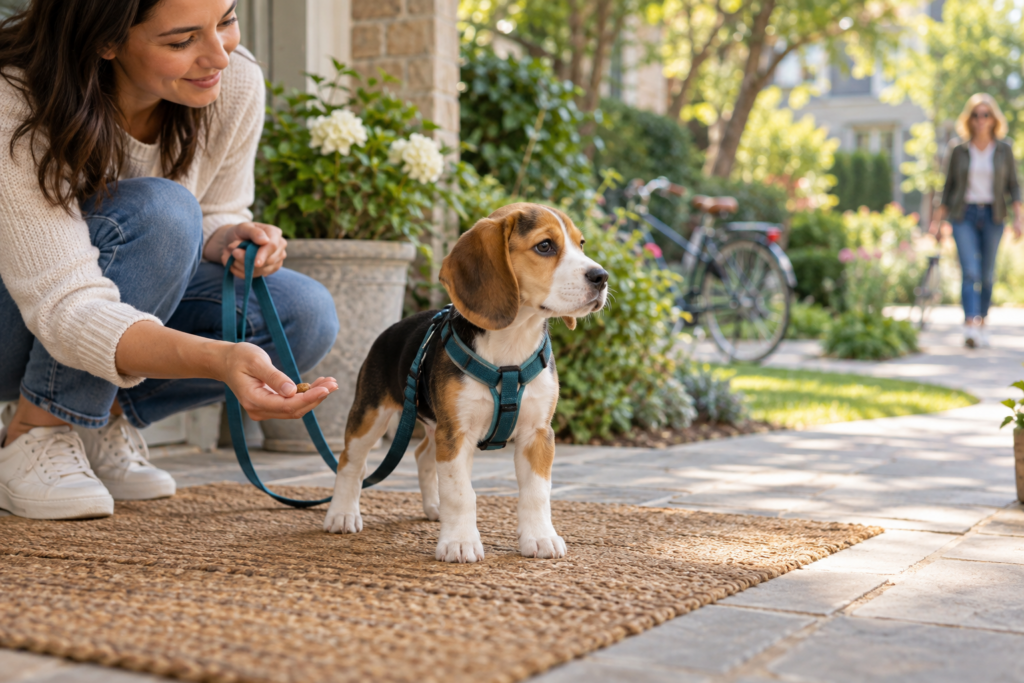
Socializing a puppy means helping them feel comfortable with the kinds of people, places, sounds, surfaces, and everyday activities they may encounter throughout life. It is much more than arranging puppy playdates.
The goal is a series of manageable, positive experiences. Your puppy does not need to greet every person or dog. Watching something from a comfortable distance can be valuable too.
Use this puppy socialization checklist as a menu of ideas, not a race to tick every box. Choose experiences that fit your life, introduce them gradually, and pay attention to how your puppy responds.
When Should You Start Socializing a Puppy?
Begin with gentle, appropriate experiences as soon as your puppy comes home. Early puppyhood is an important period for learning about the world, but socialization remains useful after that period too.
Waiting until every vaccination is complete before any new experience can mean missing valuable early opportunities. At the same time, infectious disease risk is real. The American Veterinary Society of Animal Behavior supports early socialization carried out safely, and the American Veterinary Medical Association advises keeping puppies who are not fully vaccinated away from animals of unknown vaccination status and places those animals may have been. Your veterinarian can help you choose suitable outings and classes based on your puppy’s vaccines and local disease risk. avsab.org
You can start with many experiences at home or by carrying your puppy to observe the world without placing them on heavily used dog areas.
How to Use This Checklist
For each new experience:
- Start at an easy level. That might mean watching from across the street or hearing a sound at a low volume.
- Let your puppy choose whether to approach. Do not pull them toward a person, dog, object, or surface.
- Pair the experience with something pleasant. Offer a small treat, play briefly, or calmly praise your puppy if they enjoy that.
- Keep it short. A few comfortable minutes are more useful than a long, overwhelming outing.
- Stop or make it easier if your puppy looks worried.
There is no required number of people or experiences per day. Record what your puppy noticed and how they felt, not just whether you completed an item.
Signs Your Puppy May Need More Space
A puppy who is comfortable may explore, sniff, take a treat, and move away or return by choice. A worried puppy may freeze, hide behind you, avoid the experience, repeatedly try to leave, or be unable to engage as they normally would.
If you see those signs, increase the distance or end the session. Do not hold your puppy in place until they “get used to it.” AAHA’s behavior guidance warns that forced exposure can make fear worse. If fear is intense or keeps appearing across ordinary situations, discuss it with your veterinarian or a qualified, reward-based behavior professional. aaha.org
Puppy Socialization Checklist
You can copy this list into a note and mark an item when your puppy has had a comfortable introduction. Some items will take several sessions, and some may not be relevant to where you live.
People
Introduce different people one at a time when possible. Ask visitors to let your puppy approach rather than reaching over their head or picking them up.
- Adults with different voices and appearances
- People wearing hats, glasses, or bulky coats
- People carrying bags or umbrellas
- Children seen from a comfortable distance
- Calm interactions with children, with close adult supervision
- People using mobility aids, such as a cane or wheelchair
- Delivery workers or visitors arriving at the door
Your puppy does not have to be touched by everyone. Calmly watching someone pass can count as a successful experience.
Everyday Sounds
Start with quieter versions or more distance. Let your puppy hear a household sound while they are free to move away.
- Doorbell or knocking
- Vacuum cleaner, first while it is off
- Washing machine or dishwasher
- Traffic heard from a safe distance
- Bicycles or skateboards passing
- Children playing nearby
- Rain and wind
- Recorded sounds played quietly, if your puppy remains comfortable
For the vacuum, for example, your first session could be letting your puppy investigate it while it is unplugged. Hearing it from another room can come later. There is no benefit in starting with the loudest version.
Surfaces and Objects
Let your puppy investigate safely and at their own pace.
- Carpet and hard flooring
- Grass or another appropriate outdoor surface
- A mat or low, stable platform
- A grate or textured surface, approached gradually
- A parked bicycle or stroller
- An umbrella while closed, then opened at a distance
- A car while parked
- A crate with the door secured open
Avoid slippery, unstable, or unsafe surfaces. If your puppy hesitates, reward looking or taking one step closer; they do not need to cross the surface immediately.
Gentle Handling and Care
These small lessons can make routine care easier later. Pair brief touches with treats and stop before your puppy becomes uncomfortable.
- Briefly touch each paw
- Look at an ear
- Gently lift a lip to see the teeth
- Brush for a few seconds
- Introduce a toothbrush or grooming tool
- Put on and remove a collar or harness
- Step onto a scale or low platform
- Practise standing calmly for a moment
Handling practice is not a reason to restrain a frightened puppy. Build it up in small steps. You can use the New Puppy Shopping List to identify the grooming items you actually need.
Places and Outings
Choose locations with your veterinarian’s advice in mind, especially before your puppy finishes their vaccine series.
- Watch people and traffic from your doorway or yard
- Ride calmly in a parked car
- Take a short car trip
- Observe a quiet street while being carried or from a safe spot
- Visit a calm, puppy-appropriate location
- Enter the veterinary clinic for a planned visit
- Watch a busier place from far enough away to stay relaxed
A trip can be successful even if your puppy never walks through the crowd. Sometimes the best introduction is watching for two minutes and going home.
Other Animals
Focus on calm, appropriate experiences rather than as many greetings as possible.
- Observe a dog from a comfortable distance
- Meet a known, healthy, well-matched dog when appropriate
- Practise calmly passing a dog without greeting
- See a cat or other household animal from a safe distance, if relevant
- Attend a well-run puppy class if your veterinarian agrees it is suitable
Avoid forcing nose-to-nose greetings, allowing a group of unfamiliar dogs to crowd your puppy, or using a dog park as a first socialization exercise. Ask your veterinarian which dog interactions and locations are appropriate for your puppy’s vaccination stage and your area. avma.org
A Simple First-Week Example
Your puppy is also adjusting to a new home, so keep the plan light. This is an example, not a schedule you must complete:
| Day | One small experience |
|---|---|
| 1 | Explore one room and meet the people who live at home. |
| 2 | Hear a familiar household sound from another room. |
| 3 | Investigate a harness and receive treats for approaching it. |
| 4 | Watch the street briefly from a safe, comfortable spot. |
| 5 | Meet one calm visitor, with the choice to approach or leave. |
| 6 | Take a short car trip or explore the parked car. |
| 7 | Repeat an experience your puppy enjoyed, perhaps at a slightly different distance or location. |
Ordinary daily life provides plenty of opportunities. You do not need to plan a major outing every day. Rest, meals, play, and potty breaks still matter; the Puppy Schedule by Age can help you fit short experiences into a realistic routine.
Can You Socialize a Puppy Before They Are Fully Vaccinated?
Yes, some forms of socialization can begin before the vaccine series is complete, but the safest choices depend on your puppy and local disease risk. Socialization is not synonymous with putting your puppy on the ground wherever unfamiliar dogs go.
Options to discuss with your veterinarian include carefully managed puppy classes, visits with known healthy dogs, carried outings, watching the world from a safe spot, and introductions to people and household experiences at home. Avoid contact with sick animals and use caution in locations frequented by dogs of unknown health or vaccination status. avsab.org
If you are wondering specifically about neighborhood walks, that deserves its own guide because route, surface, local disease prevalence, and your puppy’s vaccinations all affect the answer.
What If Your Puppy Is Afraid of Something?
Make the next attempt easier. Increase the distance, reduce the sound, or choose a quieter time of day. Reward your puppy for noticing the experience while they are still comfortable, then leave before they become overwhelmed.
For example, if a passing bicycle worries your puppy, you might watch bicycles from much farther away on another day. Your puppy does not need a close encounter to make progress.
If your puppy is consistently fearful, panics, or struggles to recover after ordinary encounters, speak with your veterinarian. You can ask for a referral to a qualified behavior professional who uses reward-based methods.
Does Socialization End After the First Few Months?
No. Early experiences matter, but your puppy will continue learning as they grow. Revisit familiar activities in new settings, practise calm observation, and keep respecting your puppy’s comfort.
You may also notice that something your puppy previously accepted becomes difficult for a while. Reduce the challenge and rebuild gradually instead of assuming they are being stubborn.
Start With One Comfortable Experience
Pick one item from the checklist that fits your puppy’s current routine. Make it easy, keep it brief, and notice how your puppy responds. A calm introduction today gives you a better starting point for the next one.
If you are still preparing for life with a new puppy, get the free Everything You Need for Your Puppy’s First Weeks at Home Checklist from Puppy Starter Plan. It brings the broader first-weeks essentials together in one place.