
How To Potty Train A Puppy: A Simple Step-By-Step Guide
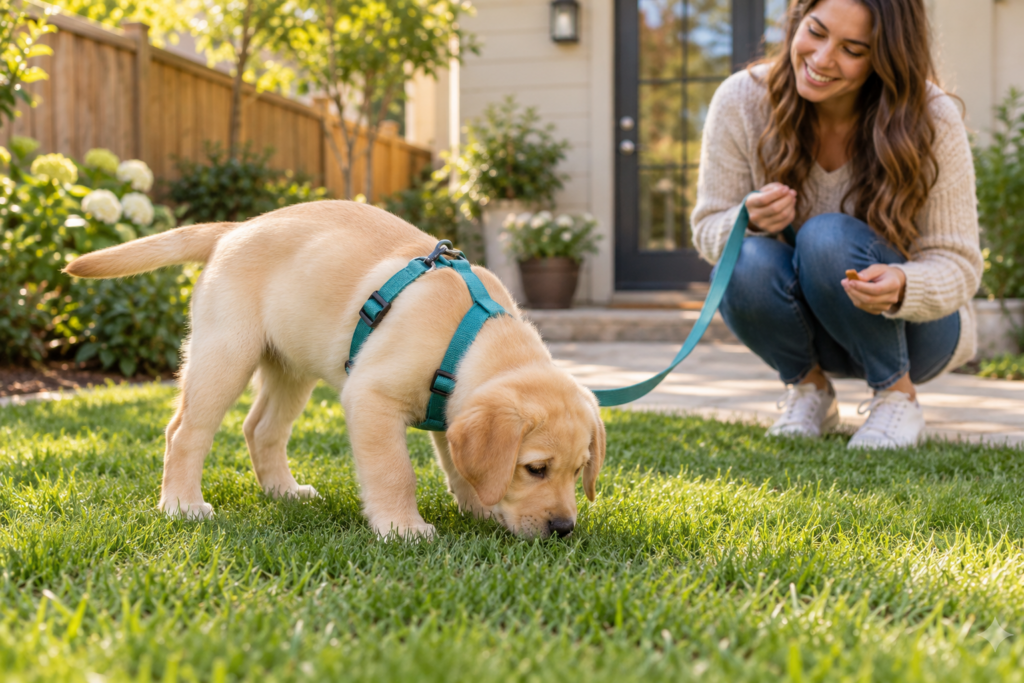
Potty training is usually one of the first jobs you’ll tackle with a new puppy.
The basic idea is simple: give your puppy frequent opportunities to go in the correct place and make successful potty trips rewarding.
The challenge is consistency.
Start From the First Day
Don’t wait several days for your puppy to settle before starting.
Decide where you want your puppy to go and begin taking them there from day one.
Using the same general area can help establish a predictable routine.
Take Your Puppy Out Frequently
Young puppies have limited bladder control.
Give your puppy frequent bathroom opportunities, especially:
- Immediately after waking
- After meals
- After drinking
- After active play
- After training
- After spending time in a crate
- Before bedtime
You may also need additional trips between these events.
Rather than focusing on a rigid universal schedule, watch your individual puppy and adjust the frequency according to their age, routine and progress.
Learn Your Puppy’s Signals
Some puppies provide obvious warning signs. Others don’t.
Watch for behaviours such as suddenly stopping play, sniffing the floor, circling, wandering away or heading toward an area where they’ve previously had an accident.
When you see suspicious behaviour, take your puppy to their potty area.
Reward Success Immediately
When your puppy goes in the correct location, reward them right away.
Praise, a small treat or both can help establish the association.
Timing matters.
Waiting until you’re back inside makes it harder for your puppy to understand exactly what earned the reward.
Use a Potty Cue
You can introduce a simple phrase such as “go potty.”
Say it calmly when your puppy begins going.
Over time, your puppy may learn to associate the phrase with the behaviour.
What to Do When Your Puppy Has an Accident
Accidents are part of potty training.
If you catch your puppy starting to go in the wrong place, calmly interrupt if possible and take them to the correct area.
If you discover an accident later, simply clean it.
Punishing your puppy afterward doesn’t teach them what they should have done instead.
Clean Accidents Thoroughly
Use an enzymatic cleaner intended for pet accidents.
Removing the odour matters because lingering smells can encourage a puppy to return to the same location.
Supervision Makes Potty Training Easier
A puppy wandering freely through the house can disappear behind furniture and have an accident before you notice.
When your puppy is awake, supervise them closely or keep them in a manageable puppy-safe area.
As reliability improves, you can gradually provide more freedom.
Can a Crate Help?
A properly introduced crate can be useful as part of a potty-training routine.
However, a crate doesn’t eliminate your puppy’s need for frequent bathroom breaks.
The crate should also be appropriately sized and introduced positively.
What About Nighttime?
Young puppies may need bathroom breaks during the night.
Keep nighttime trips calm and boring.
Take your puppy to the bathroom area, give them an opportunity to go, reward successful toileting and return to the sleeping routine rather than turning 2 a.m. into playtime.
How Long Does Puppy Potty Training Take?
There isn’t one timeline that applies to every puppy.
Age, previous experiences, consistency, routine, individual development and the environment can all affect progress.
A puppy having occasional accidents doesn’t necessarily mean training isn’t working.
Look for improvement over time.
When Accidents May Need Veterinary Attention
Contact your veterinarian if your puppy suddenly begins having unusual accidents after doing well, seems to urinate unusually frequently, strains, appears uncomfortable, has diarrhea or shows other concerning symptoms.
Not every bathroom problem is a training problem.
Consistency Is the Key
Successful potty training is largely about creating enough opportunities for your puppy to get it right.
Take them out frequently, supervise closely, reward successful trips and expect some accidents along the way.
If you’ve just brought your puppy home, you may also want our complete guide to your puppy’s first weeks at home.