
How To Stop Puppy Biting And Chewing
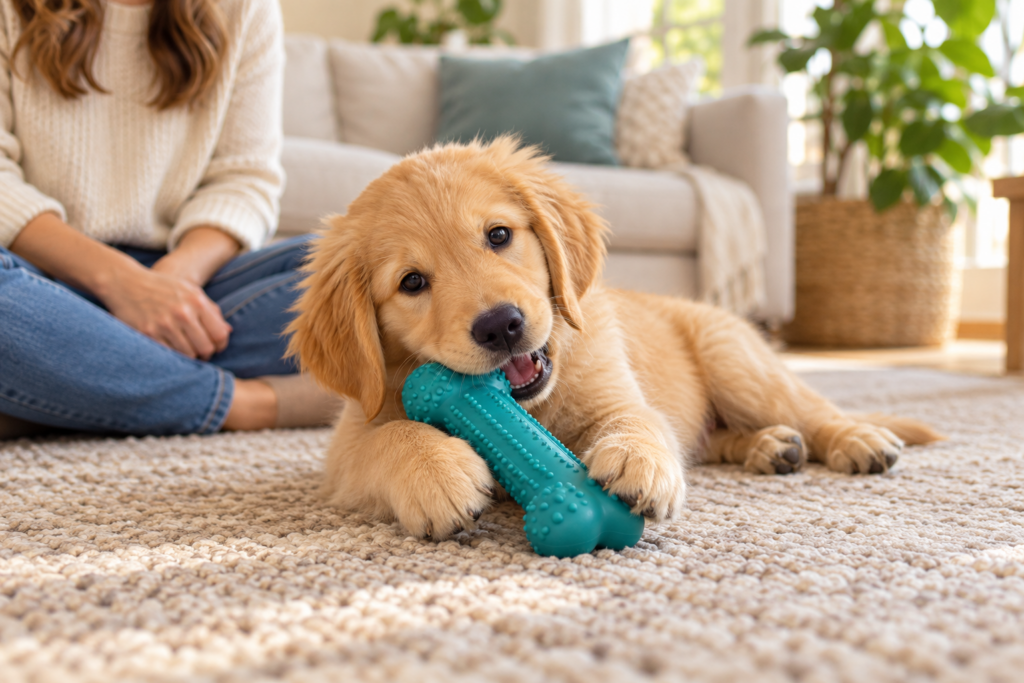
If your new puppy seems to bite your hands, clothes, furniture and everything else within reach, you’re not alone.
Mouthing and chewing are normal puppy behaviours.
The goal isn’t to expect a young puppy to suddenly stop using their mouth. It’s to teach them what they can bite and chew and how to interact appropriately with people.
Why Puppies Bite
Puppies may mouth or bite because they’re:
- Playing
- Exploring
- Teething
- Excited
- Overstimulated
- Overtired
- Seeking interaction
Understanding what’s happening immediately before the biting can help you decide how to respond.
Redirect Your Puppy to an Appropriate Toy
Keep puppy-safe toys within reach.
When your puppy begins chewing your hand, clothing or something inappropriate, redirect them toward something they are allowed to chew.
The lesson becomes:
Not that. Try this instead.
Don’t Turn Hands Into Toys
Wrestling with your puppy using your hands can make it difficult for them to understand why biting hands is encouraged during one game but discouraged five minutes later.
Use toys for interactive biting and tugging games instead.
Stop Play When It Gets Too Rough
If your puppy becomes increasingly rough, briefly stop the interaction.
You don’t need to frighten or physically punish your puppy.
Simply removing the fun for a short period can help prevent rough behaviour from being continually rewarded with attention.
Your Puppy Might Need a Nap
This one surprises many new puppy owners.
An overtired puppy may become more energetic and mouthy, not less.
If your puppy has been awake and active for a while and suddenly turns into a tiny land shark, consider whether they need quiet time and sleep.
Give Your Puppy Appropriate Things to Chew
Puppies need suitable outlets for chewing.
Rotate a small selection of puppy-appropriate toys rather than leaving everything available all the time.
Supervise toys and remove damaged items that could become choking or swallowing hazards.
What About Teething?
Teething can increase chewing.
Providing appropriate puppy-safe chewing options can give your puppy something suitable to use during this stage.
Ask your veterinarian if you’re uncertain whether a particular chew or product is appropriate for your puppy’s age and size.
Prevent Access to Things You Don’t Want Chewed
Training is only part of the solution.
Management matters too.
Keep shoes, children’s toys, electrical cords, garbage and other tempting or dangerous objects out of reach.
Use gates, pens or closed doors where appropriate.
Every prevented mistake is one less opportunity for your puppy to practise an unwanted behaviour.
Avoid Harsh Punishment
Physical punishment or deliberately frightening your puppy can damage trust and doesn’t teach them what they should do instead.
Focus on preventing unwanted behaviour, redirecting to appropriate alternatives and rewarding good choices.
Reward Calm Behaviour Too
Don’t wait until your puppy is doing something wrong before interacting with them.
Notice when they’re lying calmly, playing appropriately with a toy or making another good choice.
Positive attention for desirable behaviour helps your puppy learn what works.
When Puppy Biting Needs More Help
Normal puppy mouthing is different from every possible biting situation.
If you’re concerned about the intensity or context of your puppy’s behaviour, particularly if you see concerning aggression-related behaviour, speak with your veterinarian or a qualified behaviour professional.
Training Helps Build Better Habits
Biting is only one of many behaviours your puppy is learning.
Short, consistent training sessions can help develop communication and provide useful mental stimulation.
If you want additional structured guidance, you can also see the puppy training program we recommend.
Disclosure: We may earn a commission if you purchase through this link, at no additional cost to you.
For more help getting through the early puppy stage, read our guide to your puppy’s first weeks at home.