
10 Common Puppy Training Mistakes New Owners Make
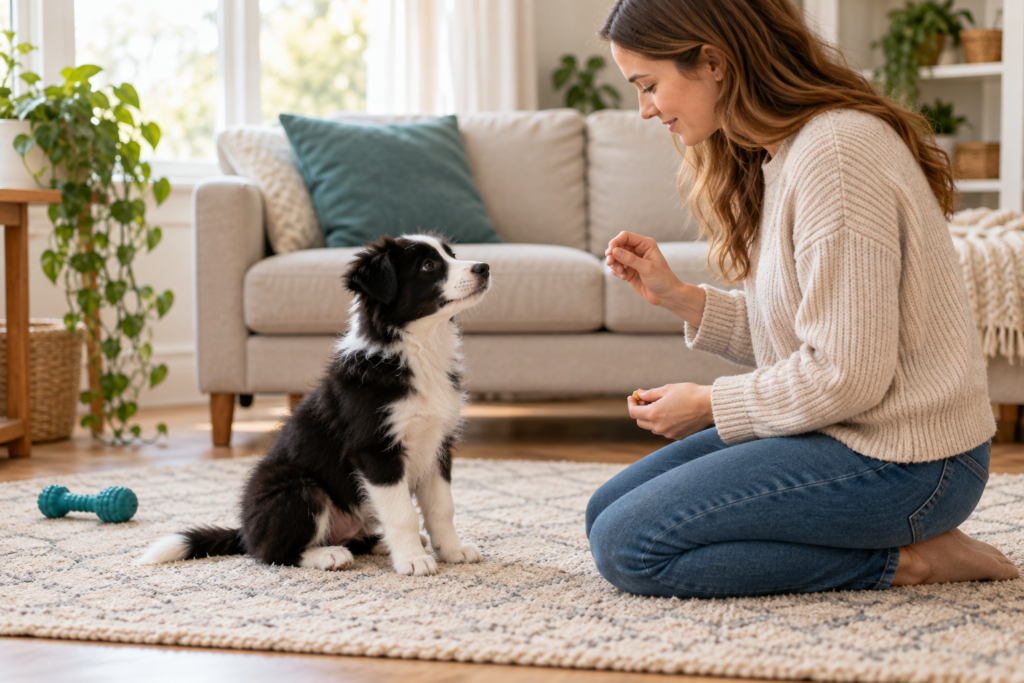
Training starts much earlier than many new puppy owners realize.
Every time your puppy receives a consequence for something they do, they’re learning.
That means training isn’t limited to formal sessions where you practise “sit” or “come.”
Here are 10 common mistakes that can make puppy training harder than it needs to be.
1. Waiting Too Long to Start Training
You don’t need to wait until your puppy reaches a particular age to begin teaching simple household skills.
Start with short, age-appropriate sessions and everyday behaviours such as name recognition, coming when called and settling calmly.
2. Making Training Sessions Too Long
More isn’t always better.
Young puppies have limited attention spans.
Several brief, enjoyable sessions throughout the day can be easier for a puppy than one long training session.
Try to finish while your puppy is still engaged.
3. Rewarding Too Late
Timing helps your puppy understand what earned the reward.
If your puppy sits and you give them a treat much later, another behaviour may have occurred in between.
Try to mark and reward the behaviour you want promptly.
4. Being Inconsistent
Consistency is especially important when several people live in the home.
If one person allows jumping while another discourages it, your puppy receives conflicting information.
Decide on basic household rules and try to have everyone follow them.
5. Only Paying Attention When Your Puppy Misbehaves
Puppies quickly discover which behaviours get attention.
Look for opportunities to reward your puppy when they’re doing something right.
That might mean lying quietly, chewing their own toy, sitting instead of jumping or walking nicely beside you.
6. Giving Too Much Freedom Too Soon
A new puppy usually isn’t ready to wander unsupervised through an entire house.
Too much freedom creates opportunities for accidents, chewing and other unwanted behaviours.
Gradually expand your puppy’s access as they demonstrate better habits.
7. Repeating Commands Over and Over
“Come. Come. Come. Come!”
Repeating a cue without a response can teach your puppy that the first few repetitions don’t matter.
Instead, make training easier and practise in environments where your puppy has a reasonable chance of succeeding.
8. Training Only When There’s a Problem
Training shouldn’t happen only after your puppy does something you don’t like.
Practise desirable behaviours before you need them.
Teaching your puppy to settle, come when called, leave objects alone and focus on you can make everyday situations easier.
9. Forgetting About Mental Stimulation and Rest
Training is mental work.
Puppies also need opportunities to sniff, explore, play appropriately and solve simple problems.
But stimulation needs to be balanced with plenty of sleep and downtime.
An overtired or overstimulated puppy may have difficulty concentrating.
10. Expecting Progress to Be Perfectly Linear
Your puppy may perform a behaviour beautifully one day and seem to forget it the next.
New environments and distractions also make familiar skills more difficult.
Keep practising and gradually increase the difficulty.
Training is a process, not a single lesson.
Want a More Structured Training Approach?
You don’t have to figure out every stage of puppy training on your own.
If you’d prefer a structured program with additional training guidance, you can take a look at the program we currently recommend for puppy owners.
See Our Recommended Puppy Training Program
Disclosure: I may earn a commission if you purchase through this link, at no additional cost to you.
Keep Training Simple
You don’t need hour-long sessions or complicated equipment.
Start with a few useful behaviours, practise regularly, reward good choices and make the exercises progressively more challenging as your puppy develops.
If your puppy is brand new to your household, start with our complete guide to your puppy’s first weeks at home.